

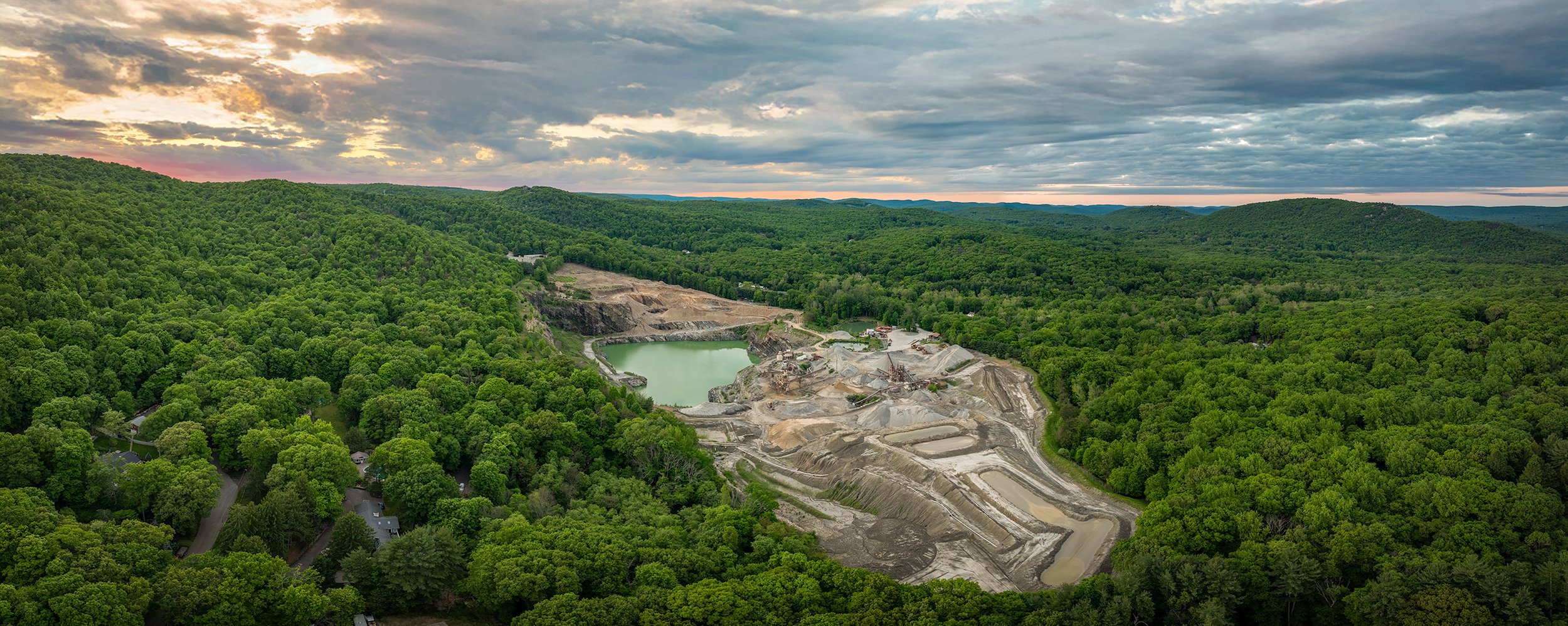
the stonetown quarry
Our town Taken for granite
Braen Stone purchased the Westbrook Road property from Van Orden Sand & Gravel in 1990. While Ringwood certainly benefits from commercial businesses that help ease our tax burden, this particular partnership raised concerns from the outset. Despite significant apprehension from residents, the Republican town council moved forward, accepting Braen’s assurances and granting the company a mining license.
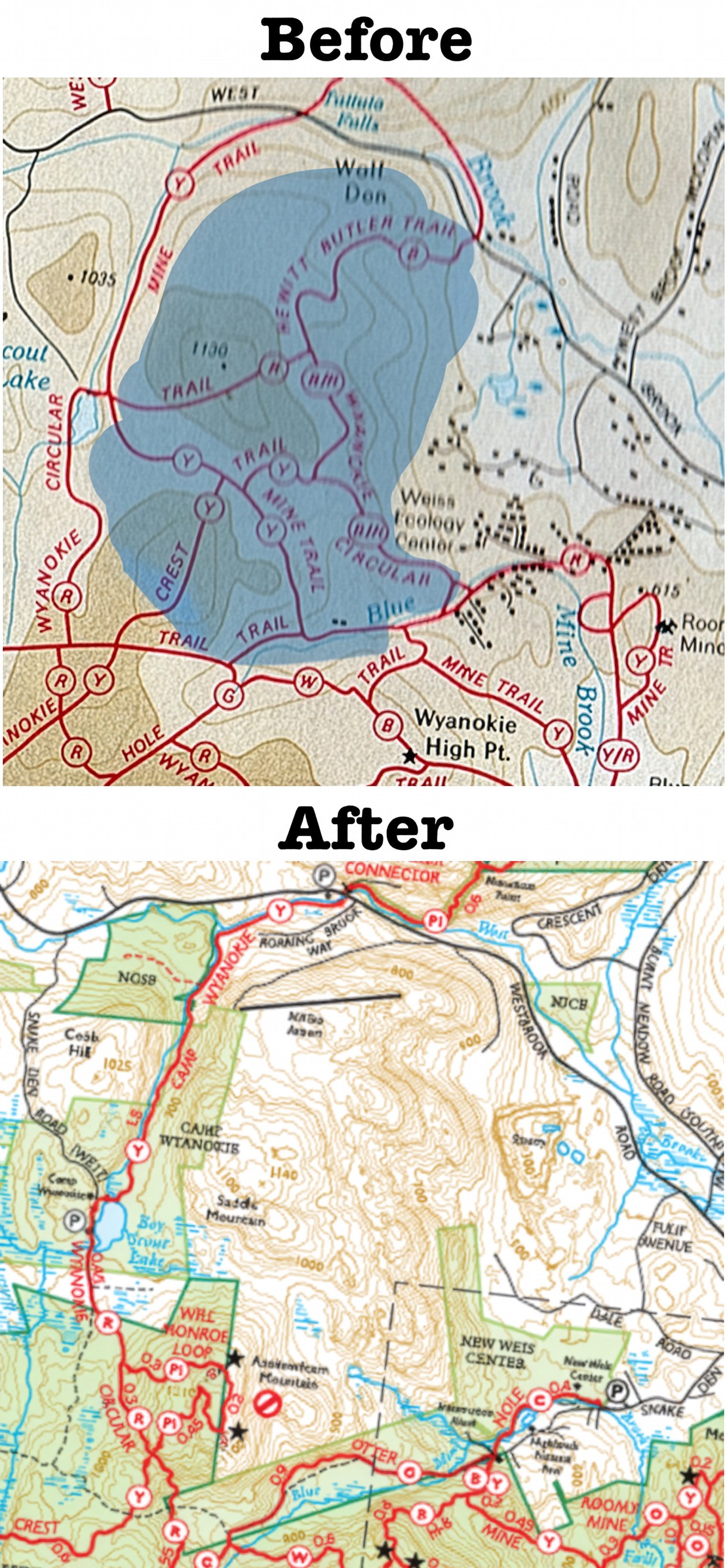
At the time, Braen promised the quarry would generate substantial property tax revenue, fully comply with all regulations, and operate with minimal disruption to our quiet, wooded community. Residents were also assured that hiking on the Norvin Green trails located on the newly acquired property, would continue uninterrupted.
Soon after approval was granted, however, those promises began to unravel. Trail blazes were removed, No Trespassing signs were installed, and trees were cut down in apparent efforts to discourage public access. The company also applied for and received Farm Tax Status from the state—arguing that clearing trees for mining qualified the land as a “tree farm.” As a result, the 95-acre property now generates only about $47,000 in property taxes, despite ongoing blasting, dust, and heavy truck traffic that affect surrounding neighborhoods. Those same dump trucks were also a significant factor in the deterioration that led to the $31 million Westbrook Road Bridge project.
Had the property been rezoned for residential development, it could potentially have produced hundreds of thousands of dollars in annual property tax revenue—without the environmental and recreational impacts associated with quarry operations.
The Braen Stone quarry stands, for many residents, as an example of the town council prioritizing corporate interests over community concerns—resulting in consequences that continue to affect Ringwood today.
key Points
Initial Acquisition (1990): Braen purchased the 400-acre site and began operations under the name Braen Stone Industries of Haledon.
Operating Limits: Permission to extract rock has been subject to various court-negotiated settlements over the decades. A key ruling capped the quarry's extraction at 413,000 tons per year and established a specific "floor threshold" for depth to protect local groundwater.
Municipal Licenses: The quarry operates under a municipal license that must be renewed periodically (typically every three years).
In 2016, a renewal agreement was signed that included new conditions, such as the installation of groundwater monitoring wells.
In February 2021, the Ringwood Borough Council approved a new three-year license after a period of dispute over a reclamation bond and safety inspections.
The quarry is currently expected to remain operational through 2051, provided it maintains its municipal licensing and adheres to extraction limits.
A History of non-compliance
Key Non-Compliance Issues
Failure to Install Monitoring Wells: In 2020, the Ringwood Borough Council denied a license renewal for the quarry, citing the company’s failure to install perimeter monitoring wells. These wells were a condition of a 2016 licensing agreement intended to safeguard private residential water supplies from the impacts of blasting and excavation.
Reclamation Bond Deficiencies: Officials also cited a failure to update the performance bond to accurately reflect modern site reclamation costs.
Extraction Depth Violations: Engineering reports in 2020 indicated the quarry had excavated 120 feet below the floor height specified in its original reclamation plan.
Licensing Lapses: The quarry has experienced periodic lapses in its municipal licensure, often leading to court orders or temporary extensions while compliance issues were being addressed.
Regulatory Actions & Inspections
License Denials: In August 2020, the Borough Council voted to give the quarry 90 days to cease operations due to these deficiencies.
Conditional Extensions: Operations were allowed to continue under council-granted extensions following promises to install the required monitoring wells. An inspection in April 2021 was set as a critical deadline to determine the quarry's future operation rights.
Historical Air Pollution: Records from the New Jersey Department of Environmental Protection (NJDEP) show a significant civil penalty of $249,350 in 2000 issued to Braen Royalty LLC for air pollution violations.
Significant Financial Obligations: The quarry has been subject to other major municipal financial requirements, such as a proposed $9.2 million reclamation bond discussed during licensing negotiations in 2020 and 2021.
Community Complaints
Property Damage from Blasting: Numerous residents have reported that the reverberations from "jaw-rattling" blasts have caused cracks in home foundations, walls, and ceilings. Some homeowners on Crescent Road and Stonetown Road described the shocks as feeling like earthquakes that knock items off walls.
Dust and Air Quality: Neighbors frequently complain about wind-blown stone dust coating their homes and cars, often making it impossible to open windows.
Noise Pollution: Beyond the mid-morning explosions, residents report noise from heavy dump trucks and diesel engines (specifically "Jake Brakes") as a significant quality-of-life issue.
Groundwater & Well Safety: A major point of contention has been the potential impact on private residential wells. Residents expressed concern that deep excavation could deplete or contaminate the local water table, particularly after a nearby pond reportedly dried up as the quarry expanded.