

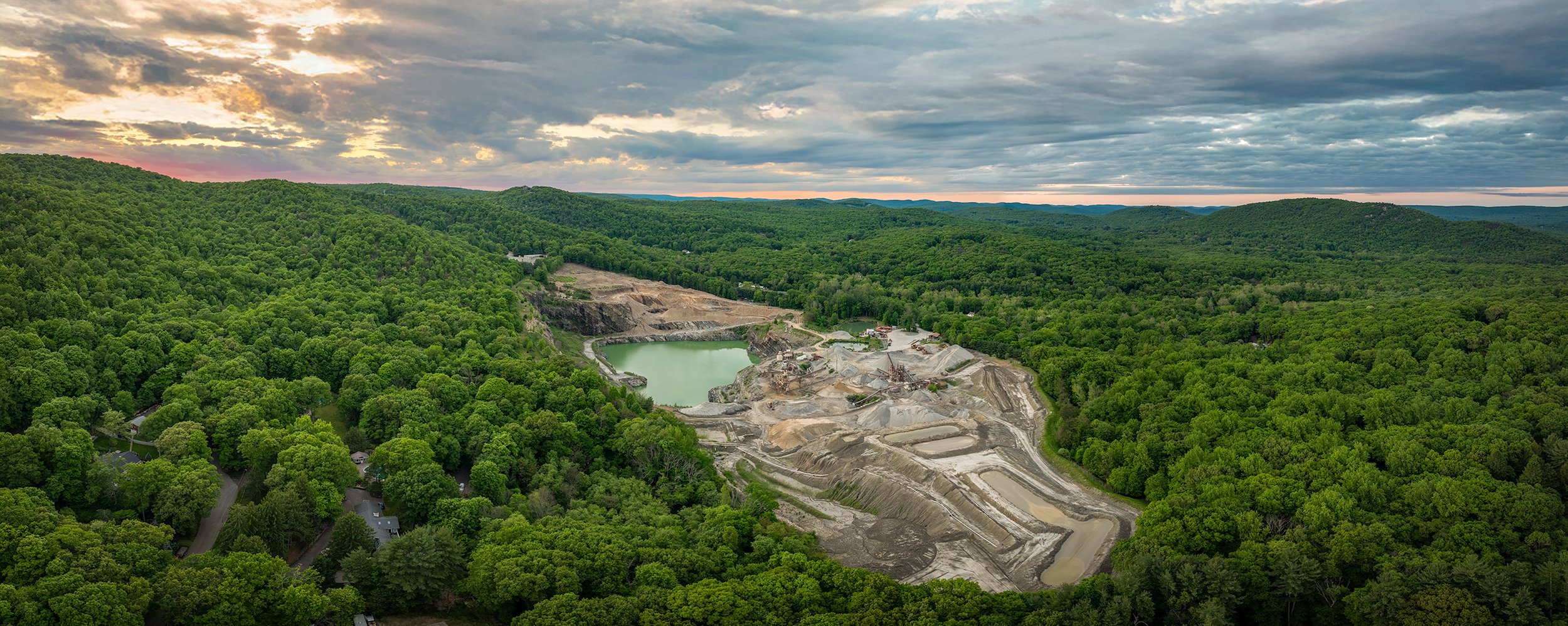
The Stonetown Quarry
Taken For Granite
Braen Stone purchased the Westbrook Road property from Van Orden Sand & Gravel in 1990. While Ringwood certainly needs businesses to help ease our tax burden, this particular partnership raised concerns from the outset. Despite significant apprehension from residents, the Republican town council moved forward, accepting Braen’s assurances and granting the company a mining license.
At the time, Braen promised the quarry would generate substantial property tax revenue, fully comply with all regulations, and operate with minimal disruption to our quiet, wooded community. Residents were also assured that hiking on the Norvin Green trails, located on the newly acquired property would continue uninterrupted.
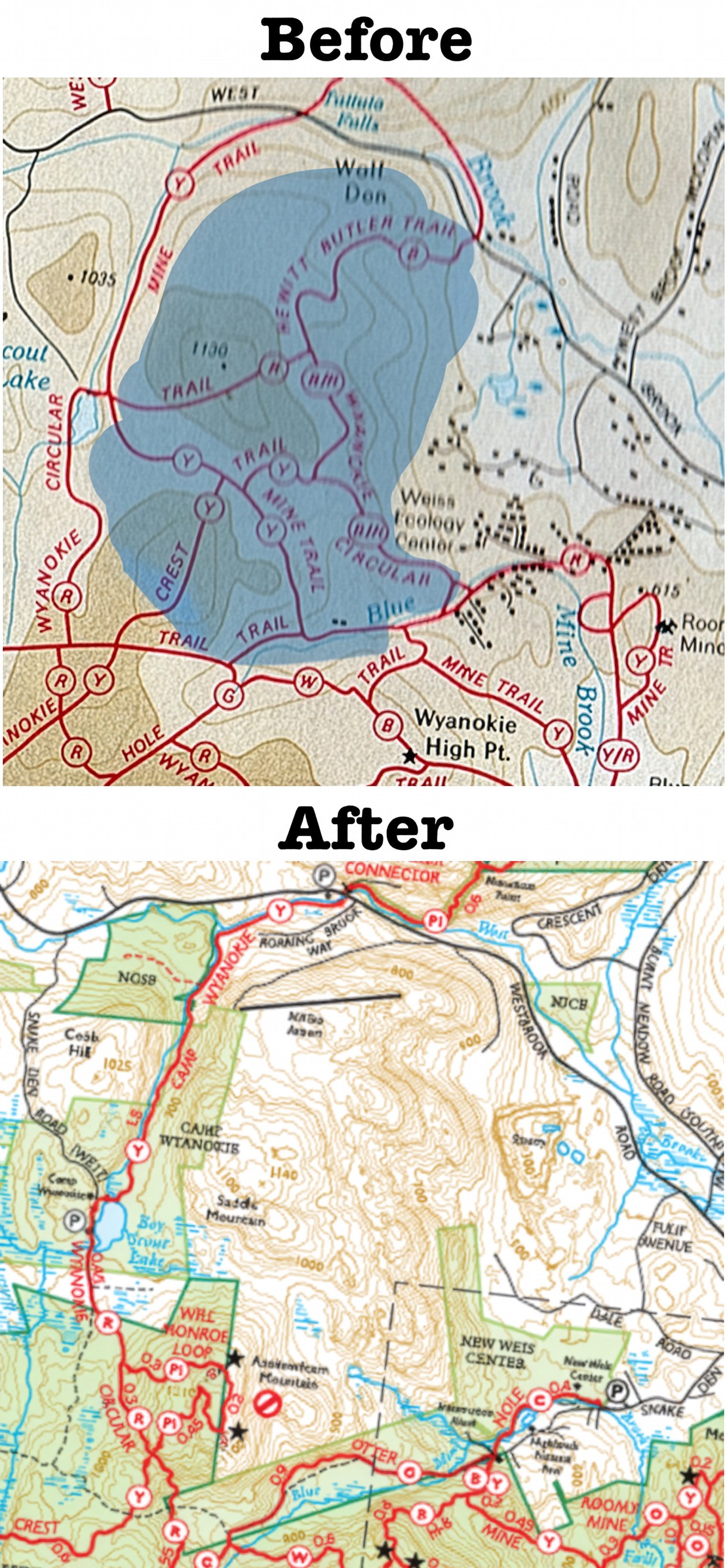
Soon after approval was granted, however, those promises started to unravel. Trails were removed from published maps, No Trespassing signs were installed and trees were cut down to discourage public access. The company also applied for and received Farm Tax Status from the state, arguing that clearing trees for mining qualifies land as a “tree farm.”
As a result, the Quarry, located on a 95-acre property, pays only $47,000 per year in property taxes (the equivalent of three homes), despite ongoing blasting, dust, and heavy truck traffic that affect surrounding neighborhoods. Those same dump trucks were also a significant factor in the deterioration that led to the $31 million Westbrook Road Bridge project.
The handling of the Braen quarry is yet another example of the Council putting special interests ahead of residents’ voices — and in doing so, embracing environmental and fiscal policies that put Ringwood at risk.
A History of Non-Compliance
In 1990, Braen purchased the 400-acre Ringwood site and began operating as Braen Stone Industries of Haledon. From the outset, the quarry’s right to extract rock has been governed by court-negotiated settlements and municipal oversight. A key judicial ruling capped annual extraction at 413,000 tons and established a strict “floor threshold” limiting excavation depth in order to protect local groundwater resources.
The quarry operates under a municipal license that must be renewed periodically, typically every three years. Over time, these renewals have become focal points for regulatory scrutiny and public concern. In 2016, the Borough signed a renewal agreement that imposed new conditions, including the installation of perimeter groundwater monitoring wells designed to protect nearby private drinking water supplies from the impacts of blasting and excavation.
By 2020, compliance disputes intensified. The Borough Council denied a license renewal after determining that the required monitoring wells had not been installed. Officials also cited deficiencies in the quarry’s reclamation bond, arguing that the posted performance bond did not adequately reflect modern site restoration costs. Around the same time, engineering reports indicated that excavation had extended approximately 120 feet below the floor height specified in the original reclamation plan. These findings raised concerns about groundwater protection and adherence to agreed-upon limits.
In August 2020, the Council voted to give the quarry 90 days to cease operations due to these deficiencies. However, operations continued under conditional extensions granted while compliance issues were addressed. An April 2021 inspection was set as a critical benchmark for determining whether the quarry could continue operating. In 2021, following negotiations over the reclamation bond and safety inspections, the Borough approved a new three-year license.
The quarry has also faced regulatory enforcement beyond municipal oversight. In 2000, the New Jersey Department of Environmental Protection (NJDEP) issued a significant civil penalty of $249,350 to Braen Royalty LLC for air pollution violations. Financial obligations tied to the quarry have remained substantial, including discussions during 2020–2021 licensing negotiations of a proposed $9.2 million reclamation bond to ensure adequate site restoration.
The next renewal vote is scheduled for April, 2026. Provided it maintains municipal licensure and complies with extraction limits and environmental conditions, the quarry is currently projected to remain operational through 2051.
Community Complaints
Property Damage from Blasting: Residents have reported that the reverberations from "jaw-rattling" blasts have caused cracks in home foundations, walls, and ceilings. Some homeowners on Crescent Road and Stonetown Road described the shocks as feeling like earthquakes that knock items off walls.
Dust and Air Quality: Neighbors frequently complain about wind-blown stone dust coating their homes and cars, often making it impossible to open windows.
Noise Pollution: Beyond the mid-morning explosions, residents report noise from heavy dump trucks and diesel engines (specifically "Jake Brakes") as a significant quality-of-life issue.
Groundwater & Well Safety: A major point of contention has been the potential impact on private residential wells. Residents expressed concern that deep excavation could deplete or contaminate the local water table, particularly after a nearby pond reportedly dried up as the quarry expanded.